DHT and Hair Loss: The Science Behind Male Pattern Baldness
Nicholas Askew, MBA
VP of Operations · July 16, 2026
DHT and hair loss are closely linked through a biological process that gradually shrinks your scalp hair follicles. Dihydrotestosterone (DHT) is a potent hormone your body creates when it converts a small portion of your testosterone using the 5-alpha-reductase enzyme. This hormone can bind to receptors in the scalp and cause follicles to miniaturize, leading to thinner, shorter hairs until they eventually stop producing hair entirely. This condition, known as androgenetic alopecia, is driven primarily by genetic sensitivity to DHT rather than the amount of DHT you have.
Ready to take control of your hair health? Call (888) 515-8385 to schedule a consultation with a licensed provider today.
We will look at how these hormones impact your scalp health and show the best ways to slow thinning. You can also read our complete guide to hair loss treatments for a deeper look at peptide therapy and online care choices. To grasp why your body reacts this way, we must first understand what DHT is and why it causes hair loss.
DHT and Hair Loss: What Is DHT and Why Does It Cause Hair Loss?
DHT (dihydrotestosterone) is a potent androgen created when the 5-alpha-reductase enzyme converts about 5-10% of free testosterone. It is roughly 2.5 times stronger than testosterone at binding to androgen receptors. In the scalp, DHT binds to follicle receptors and triggers a process called miniaturization. Where hair follicles gradually shrink and produce thinner, shorter hairs until they stop growing entirely.
DHT stands for dihydrotestosterone. It is a strong hormone that the body makes from testosterone. While testosterone is well-known for building muscle and strength, DHT is even stronger in some ways. It helps with male development as you age and plays a role in body hair and sexual health. But for many men, it is also the main reason for a receding hairline or thinning on top of the head.
Most hair loss is tied to how the scalp reacts to this hormone. While DHT is needed for health when you are young, its effects on the scalp change as you age. Knowing how this hormone works is the first step in learning how to stop it. By looking at the science of your body, you can find ways to protect your hair follicles from harm.
The Role of 5-Alpha Reductase
The body does not just make DHT on its own. It uses an enzyme called 5-alpha reductase to change testosterone into DHT. In most adult men, about 5 to 10 percent of free testosterone goes through this conversion. Research shows that DHT is about 2.5 times stronger than testosterone when it binds to receptors in your tissues.
This conversion happens in many parts of the body, such as the liver and hair follicles. The amount of the enzyme in your scalp can change how much DHT is near your hair. If your body makes too much of this enzyme, it can lead to higher levels of the hormone. This is why many drugs focus on blocking this enzyme to lower DHT levels.
How DHT Shrinks Hair Follicles
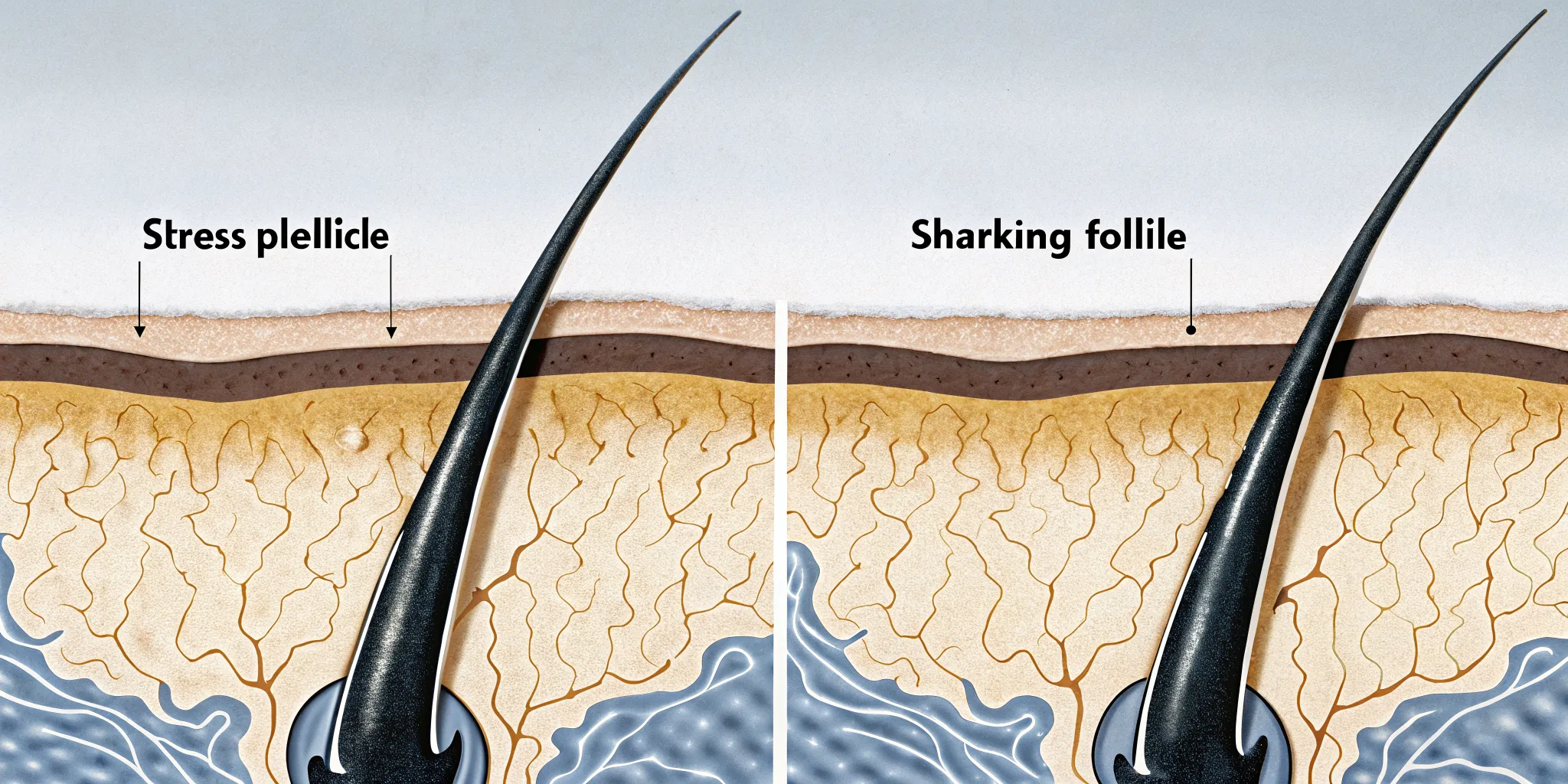
When DHT reaches the scalp, it binds to receptors in the hair follicles. This triggers a gradual shrinking process where the follicles get smaller over each growth cycle. As they shrink, they grow hairs that are thinner and shorter. Over time, the follicles may become so small that they stop growing hair entirely.
Managing these levels is a key part of hair care today. If you want a way to start, a hair loss treatment resource can show you how different drugs work. They help block this pathway and keep your hair thick. Catching the signs of shrinking early gives you the best chance to save your hair.
Why Genetic Risk Matters
High levels of DHT are not the only cause of hair loss. Many men have normal levels but still lose their hair due to their genes. Some people have hair follicles that are more sensitive to DHT than others. If you have this trait, even small amounts of the hormone can cause your hair to thin.
The number of receptors on your scalp also plays a big role in how you lose hair. It often starts at the temples or the top of the head because those spots have more receptors. By knowing your own risk for hair loss, you can take steps to protect your hair. It is best to act before the thinning becomes permanent.
How DHT Sensitivity Varies Between Individuals
DHT sensitivity depends primarily on the number of androgen receptors in your hair follicles and your genetic predisposition. People with a family history of male pattern baldness tend to have follicles that are more vulnerable to DHT. Even individuals with normal DHT levels can experience significant thinning if their follicles have a high concentration of androgen receptors, particularly at the crown and temples.
Not every person with high DHT will lose their hair. The key is how your body reacts to the hormone. While some people keep a full head of hair for life, others see thinning early on. This happens because hair follicles have different levels of sensitivity to DHT. Some people are born with follicles that can handle DHT, while others have follicles that shrink when they encounter it.
The Role of Androgen Receptors
Your hair follicles have small structures called androgen receptors. These receptors bind to DHT as it moves through your body. When DHT attaches to these spots, it can signal the follicle to shrink. This process makes the follicle smaller and smaller over time. Eventually, the hair becomes too thin to see, and the follicle may stop growing hair entirely.
Research shows that people with hair loss often have more of these receptors in certain parts of their scalp. Follicles at the hairline and crown tend to have more receptors than those on the sides or back. This is why most men lose hair in a specific pattern but keep hair on the back of their head. You can learn more about how these changes work in our guide to DHT and hair loss treatments.
Genetic Factors and Hair Follicle Health
Your genes play a huge role in how your hair handles DHT. If your parents or grandparents lost their hair, you might have genes that make your follicles more sensitive. This genetic link is the main reason for male pattern baldness. It is not just about having too much of a hormone. It is about how your scalp cells respond to it. Your DNA tells your receptors how to act when DHT is near.
According to the Cleveland Clinic, high levels of DHT can lead to hair loss in people who are already prone to it. But even with lower levels, some people still lose hair if their follicles are very sensitive. This means you do not need to have a major hormone problem to see changes in your hair. Many people with perfect health still experience thinning because of their genetic makeup.
High DHT Levels vs Normal Testosterone
It is possible to have normal testosterone levels but still have high DHT. This happens when your body has a lot of the enzyme that converts testosterone into DHT, known as 5-alpha-reductase. Since DHT is much stronger than testosterone, even a small increase can have a big impact on your scalp health. Some people simply produce more of this enzyme than others.
Studies suggest that scalp skin in balding areas may even produce more DHT on its own. A review in PMC notes that androgen receptor activity varies widely between people. This is why two people with the same hormone levels can have very different hair growth. Understanding your own risk is the first step toward finding a plan that works for you.
Which Hair Loss Treatments Block DHT?
The most effective DHT blockers are prescription medications that inhibit the 5-alpha-reductase enzyme. Finasteride blocks type II 5-AR and reduces scalp DHT by 60-70%. Dutasteride blocks both type I and II enzymes, reducing DHT by over 90%. Minoxidil does not block DHT directly but stimulates blood flow to follicles. Natural options like saw palmetto have minimal and variable DHT-blocking effects compared to prescription treatments.
Stopping hair loss often means finding ways to lower DHT levels in the scalp. Some drugs work by blocking the enzyme that creates DHT, while other treatments help in different ways. Knowing how these options work can help you find the best plan for your needs. At NowCare, we offer access to these treatments through our hair restoration program. This includes doctor-guided care and discreet delivery to your home.
Prescription DHT blockers
The most common way to lower DHT is through prescription drugs. Finasteride is a widely used pill that stops the type II 5-alpha-reductase enzyme. Research from the National Institutes of Health shows that finasteride can lower scalp DHT levels by 60% to 70%. This reduction helps follicles return to a healthy size and grow thicker hair over time.
For more severe cases, some doctors may use dutasteride. This drug is even stronger because it blocks both types of the 5-alpha-reductase enzyme. According to the Cleveland Clinic, dutasteride can lower DHT by more than 90%. While it is very effective, it is often reserved for those who do not see enough results with other pills.
Complementary options
Minoxidil is another popular choice, but it does not block DHT. Instead, it works by helping blood flow to the hair follicles. This gives the hair the nutrients it needs to grow. Many people use both a DHT blocker and minoxidil to get better results. This two-part approach targets the cause of the loss while also boosting growth.
Some people look for natural ways to block DHT, like saw palmetto. While some early tests show it might help, the evidence is not as strong as it is for prescription drugs. Most experts agree that natural blockers are not as powerful as medical ones. If you want to see real change, a custom protocol from a professional is usually the best path.
Comparing hair loss treatments
Choosing the right treatment depends on your goals and how much hair you have lost. Some treatments work on the hormone level, while others focus on the scalp environment. The table below shows the key differences between the most common hair loss options.
| Treatment | How It Works | DHT Reduction | Best For |
|---|---|---|---|
| Finasteride | Blocks type II 5-AR enzyme | 60-70% reduction | Early to mild hair loss |
| Dutasteride | Blocks type I and II enzymes | 90%+ reduction | Severe or resistant loss |
| Minoxidil | Increases follicle blood flow | No direct DHT block | Boosting new growth |
| Saw Palmetto | Mild enzyme inhibitor | Minimal / Variable | Supporting scalp health |
Does TRT Accelerate Hair Loss Through DHT?
Testosterone replacement therapy (TRT) can increase DHT levels because the body converts about 5-10% of available testosterone into DHT via the 5-alpha-reductase enzyme. Whether this triggers or accelerates hair loss depends primarily on your genetic sensitivity. Men with a family history of pattern baldness may experience faster thinning on TRT, while those without the genetic predisposition often see no hair changes at all.
Testosterone replacement therapy (TRT) can help men with low hormone levels feel better. But many people worry if the treatment will lead to thinning hair. The link between TRT and hair loss comes down to DHT. While TRT adds more testosterone to your body, it can also raise your DHT levels.
The pathway from TRT to DHT
When you start testosterone replacement therapy, your total testosterone levels go up. Your body naturally converts about 5-10% of this free testosterone into DHT. This process happens because of an enzyme called 5-alpha-reductase. Since you have more testosterone available, your body may produce more DHT as a result. This extra DHT can then bind to receptors in your scalp.
DHT is about 2.5 times stronger than testosterone when it binds to these receptors. On the scalp, it can cause hair follicles to shrink. This causes the follicles to grow shorter, thinner hairs over time. Eventually, the follicles may stop growing hair altogether. This is the main cause of male pattern baldness in most men.
Role of genetic sensitivity
It is important to know that TRT does not cause hair loss in everyone. Whether you lose hair depends mostly on your genes. Some people have hair follicles that are very sensitive to DHT. For these men, even a small increase in DHT can speed up hair thinning. If you do not have the gene for pattern baldness, higher DHT levels from TRT may not affect your hair at all.
Doctors can help you manage these changes while you are on TRT. If you notice thinning while on therapy, your provider can help you find a way to protect your hair. This might include using treatments that block the 5-alpha-reductase enzyme or increase blood flow to your scalp.
Balancing hormone health and hair
You do not have to choose between your energy levels and your hair. Many men use hair loss treatments alongside their hormone therapy. Tools like finasteride can block the conversion of testosterone to DHT. This helps lower the amount of DHT that reaches your scalp follicles. This way, you can get the benefits of TRT while keeping your hair full and healthy.
What Is the Most Effective Approach to Treating DHT-Related Hair Loss?
The most effective approach combines early intervention with multiple treatment methods. Start by recognizing early signs like increased shedding or a receding hairline. Consult a provider to confirm DHT as the cause. Use FDA-approved DHT blockers like finasteride alongside growth stimulators like minoxidil. Build a consistent daily routine and track your progress over 6-12 months.
Stopping DHT and hair loss works best when you act fast. The sooner you start a plan, the more hair you can save. Hair follicles that shrink too much may stop growing hair for good. Most experts agree that a mix of treatments gives the best results. This method hits the problem from many sides at once.
Ready to protect your hair? Call (888) 515-8385 to speak with a NowCare provider today.
Finding the signs early
You may first see more hair in the shower or a hairline that moves back. These are common signs that DHT is affecting your scalp. It is important to know that most people lose some hair every day. But when the loss continues and the hair gets thinner, it is time to act. Taking action now can help keep your hair full for a longer time.
Getting a clear view of your health is the next step. You need to know if DHT is the main cause or if other factors are at play. A hair loss treatment overview can help you learn more about how hormones affect your scalp. Knowing the facts helps you make the right choice for your care.
A plan for hair regrowth
The best path uses a clear set of steps to block DHT and boost growth. Most doctors find that using two or more methods works better than just one. This mix is often called combination therapy. It helps to block the hormone while also giving the follicles the blood they need to grow.
- 1Spot the first signs. Look for thinning at the crown or a hairline that moves back. Catching these changes early is the best way to get good results.
- 2Get an expert check. Talk to a provider to find the root cause of your hair loss. They may ask for blood work to check your hormone levels and health.
- 3Use proven treatments. Consider FDA-approved drugs like finasteride to lower DHT levels. You can also use minoxidil to help blood flow to your hair follicles.
- 4Build a daily routine. Use your treatments at the same time every day. Regular use is the key to seeing real change in your hair.
- 5Track your progress. Watch how your hair changes over six to twelve months. Work with your provider to adjust your plan as your hair grows back.
Studies show that using finasteride and minoxidil together is more helpful than using either one alone. According to the International Society of Hair Restoration Surgery (ISHRS), early action is vital to stop the loss of hair follicles. When you use both a DHT blocker and a growth booster, you give your hair the best chance to stay thick.
Custom care with NowCare
NowCare makes it easy to start your journey to better hair health. Our platform connects you with licensed providers who can review your health intake online. They look at your unique needs to find the best plan for you. This helps ensure your treatment is safe and fits your life well.
Once your plan is set, we provide discreet delivery right to your door. This saves you time and keeps your care private. We also offer ongoing check-ins to see how you are doing. Our goal is to give you expert care and high-quality treatments. You can get the help you need without leaving your home. Start your hair restoration journey today.
Frequently Asked Questions
Can you have high DHT but normal testosterone?
Yes, you can have normal testosterone levels while having high DHT. This often happens because of elevated levels of the 5-alpha-reductase enzyme, which converts testosterone into DHT. According to the Cleveland Clinic, your body usually converts about 5% to 10% of testosterone into DHT. If your body makes this conversion efficiently, your scalp can have high DHT levels even with normal overall testosterone.
Is DHT only produced in the scalp?
No, DHT is produced in many parts of the body, including the skin, liver, and prostate. It plays a key role in male development during puberty, helping grow facial and body hair and supporting muscle mass. However, on the scalp, DHT can bind to follicles and cause them to shrink, which is why high levels are often linked to thinning hair.
What causes high DHT levels?
Several factors can cause high DHT levels. Genetics play a major role in how much DHT your body produces and how sensitive your follicles are to it. Higher testosterone levels can also lead to more DHT since it is derived from testosterone. Additionally, having more of the 5-alpha-reductase enzyme can accelerate this conversion process. According to the Cleveland Clinic, high DHT is also linked to an enlarged prostate and certain skin conditions.
Can DHT blockers regrow hair?
DHT blockers can stop further hair loss and may stimulate some regrowth. When DHT levels are lowered, follicles that have shrunk can sometimes return to a healthy size and produce thicker hair. Results are best when treatment starts early, and most men see significant improvement with consistent use.
Ready to stop DHT from thinning your hair?
Waiting to treat hair loss can lead to permanent follicle loss and deep thinning that is hard to reverse later. By starting your care plan now, you can stop DHT from causing more harm and preserve the hair you still have. Our simple online process connects you with a licensed provider to find the right path for your needs. We focus on clear steps that fit your life and help you feel good about your appearance.
Call (888) 515-8385 today to schedule your consultation. Take the first step toward healthier, fuller hair with NowCare.